
Our History
Before Anglos arrived, the high desert country that became Jefferson County was for centuries walked upon by Native Americans, the Sahaptins and the Northern Paiute. The first permanent communities of what today is Jefferson County were those of Native Americans placed here when the Warm Springs Indian Reservation was established by the Treaty of 1855, four years before the state of Oregon was established.
Anglos began arriving in Central Oregon in the 1860s, many lured from the Willamette Valley by tall grass for livestock and plenty of timber in what became the Ochoco country.
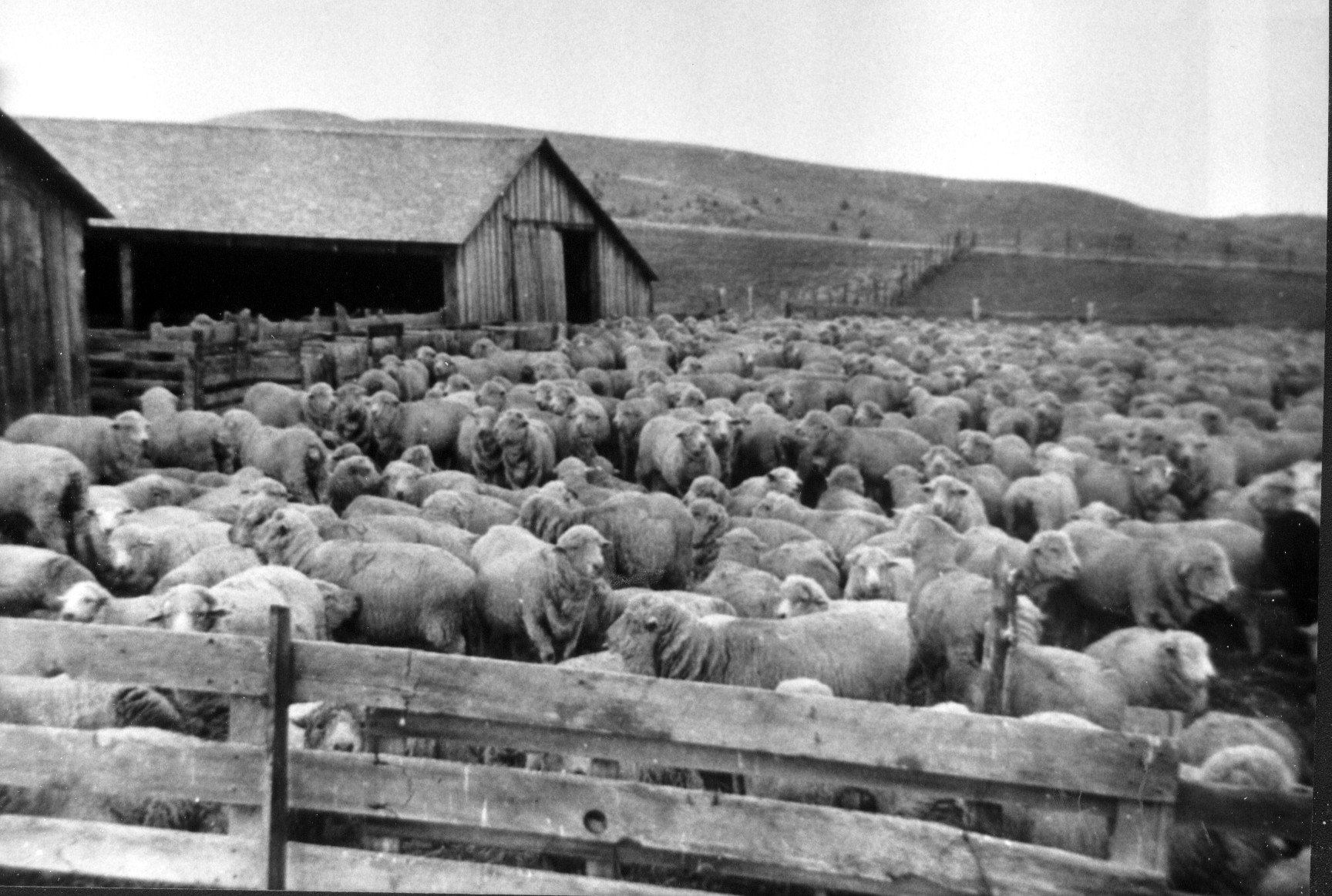
Sheep at Hay Creek Ranch, 1900. The iconic ranch was established in 1873.
Prineville became the region’s first incorporated town, in 1880, and the only town between The Dalles and Linkville (Klamath Falls). Crook County, taking in current Crook, Jefferson and Deschutes counties, was established in 1882.
Livestock raising and timber continued to spur steady growth in the region in the last quarter of the 1800s, including the formation of the sprawling Hay Creek Ranch in 1873.
Homesteaders continued to swell Crook County, and several stage stops were established. Further north of Hay Creek Ranch, settlers started ranches along the Trout Creek drainage, an area enhanced when, in 1897, the Columbia Southern Railway brought rails from Biggs to nearby Shaniko in southern Wasco County. The town of Ashwood was established in the north county in 1901. Ashwood experienced mining booms in the first half of the century due to the nearby Oregon King and Horse Heaven mines.
In 1902, John Palmehn plotted a town in the expansive Willow Creek basin country between Hay Creek Ranch to the east and the confluence of the Deschutes, Crooked and Metolius rivers to the west. At the time he filed, there were two houses in the new town. Originally called Palmain (an Americanized version of Palmehn) the town had to submit a new name after Palmain was refused by the U.S. Postal Service because it was too close to another Oregon town.
The name Madras was selected – and legends differ on how it was chosen, though Postmaster Joshua Hahn being inspired by a bolt of Madras cloth in his store is the most likely story – and by 1904, the little town had several businesses and a town newspaper. In 1910, it became the first incorporated city in what was to become Jefferson County.
Feeding the growth of Madras was the rapid increase of homesteaders arriving in the early 1900s to farm the flatlands of the Agency Plains north of Madras, and the relatively flat areas to the south of the town. Madras became the region’s central location for mail and other services.

The crowd gathers to celebrate the first train in Central Oregon, in Madras, Railroad Day Feb. 15, 1911.
What Crook County and Oregon’s central interior didn’t have was a railroad. That changed in 1911, with the nation’s last great railroad race, between James Hill’s Oregon Trunk line and Edward Harriman’s Deschutes Railroad. Starting in 1909, the companies’ crews raced and antagonized each other up the Deschutes River.
On Feb. 15, 1911, the Oregon Trunk line reached Madras and Central Oregon first, though the Deschutes line arrived shortly after. After not having a single railroad, the region then had two, though they shared the marvelous steel bridge over the Crooked River Gorge.
The railroad was certainly the dawn of a new era. The town of Culver (originally Perryville then Collver) moved westward from its original spot near Haystack Butte to be along the rail line. Between Madras and New Culver, the Oregon Trunk established the town of Metolius as a roundhouse hub. The railroad traversed Crook County by way of Madras, Redmond and Bend, bypassing the county seat of Prineville.
The newer towns thrived with the railroad and soon began pushing to forge two new counties, one to the north, and one to the west. In 1914, voters created Jefferson and in 1916, Deschutes County. Gov. Oswald West appointed three commissioners – one from Madras, one from Metolius and one from Culver — to the first court of Jefferson, and the first order of business was to establish a temporary county seat until voters could adopt a permanent one. It took several hundred votes, as each commissioner kept voting for his own town, but finally, J.M. King of Metolius gave his support to Culver. Henry Gard of Madras refused to make it unanimous.

The first elected officials of Jefferson County gather shortly after the county was formed in 1914.
In 1916, in a countywide vote to determine a permanent seat, Madras became the county seat. On Jan. 1, 1917, in snowy conditions, a group of Madras residents went to Culver and, depending on point of view, either stole or simply obtained the county records to move them to Madras. The incident led to decades of animosity between the two towns, elements of which some say still remain.
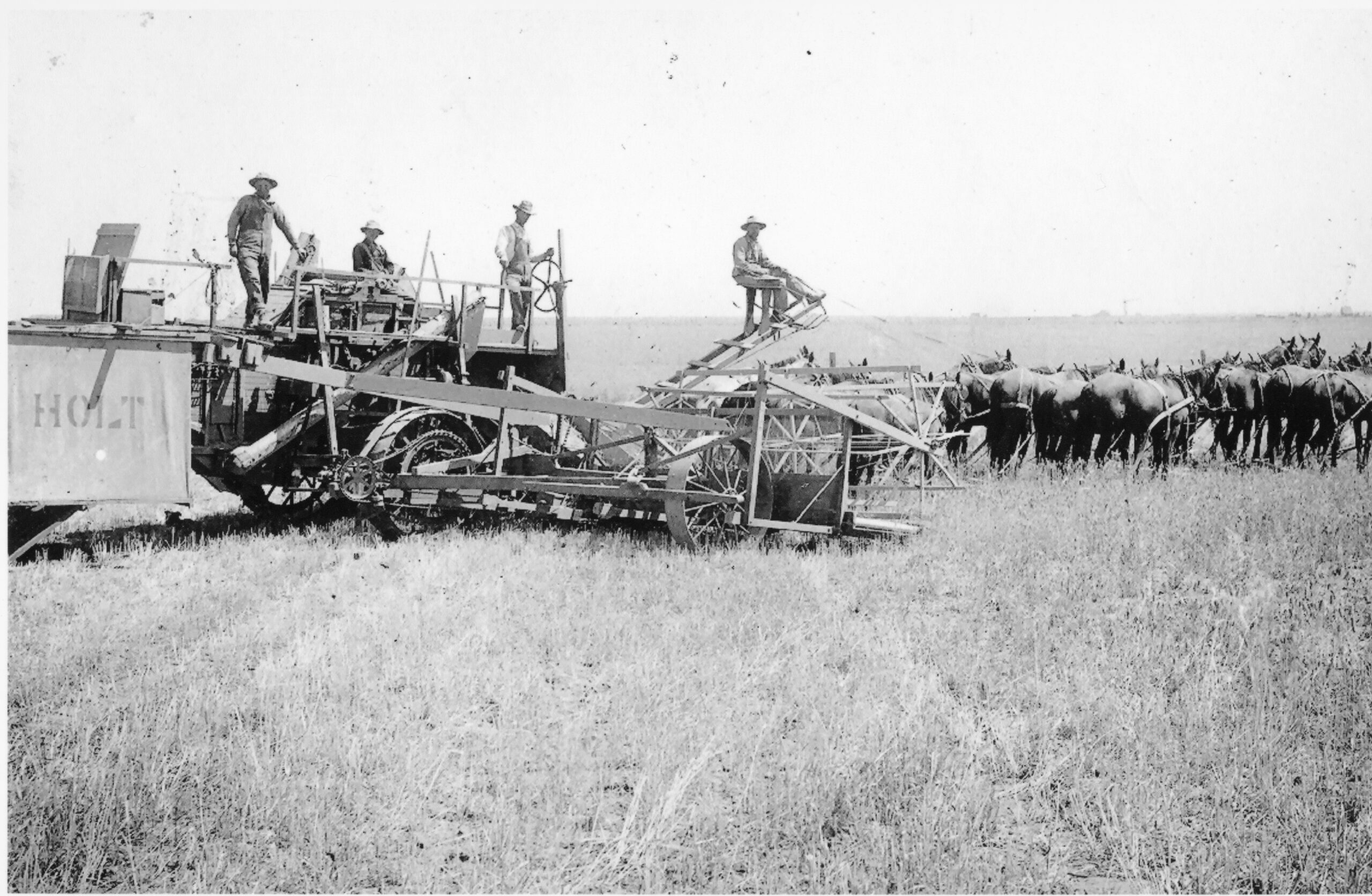
Horse-pulled dryland farm harvesting.
The robust economic climate of the first 20 years of the century waned as more normal drought-like conditions greeted the high desert. Dryland farming, which had formed the bedrock of Jefferson County, became more difficult. Forward-thinking local farmers, in 1916, established the North Unit Irrigation District, in hopes of bringing Deschutes River Basin water to the flat lands of central Jefferson County. Their wait would be long.
The 1920s saw the proliferation of automobiles. The Dalles-California Highway was finished – a north-south highway through the center of Oregon, featuring the Crooked River Gorge Bridge in Jefferson County. When it opened in 1927, the gorge structure was the tallest expanse bridge in the nation. Automobiles also signaled a decline in rail usage. In 1924, the Oregon Trunk lines were pulled out, leaving only one rail line in the county.
The Depression was brutal everywhere, certainly in Jefferson County. In 1937, the federal government’s Marginal Lands Program (officially, the Land Utilization Program) threw a lifeline to the county by buying out the homesteaders that were not in the irrigation district. At one time there were more than 700 homesteads across the land that became “The Marginal.” At the time of the buyout program, approximately 50 were occupied. The towns struggled to maintain populations. Through the program, homesteads from the Geneva-Grandview areas west of the rivers to Gray and Grizzly buttes to the south, and lands east of Madras were dismantled by Civilian Conservation Corp (CCC) crews. Homes, outbuildings and fences were removed and crested wheat grass planted. The federal government took over the 90,000-plus acres for grazing and public recreation.
While many of the homesteaders had long abandoned their county residences, the Marginal Program triggered a further reduction of population in the county. A third of the 3,211 residents who lived in the county in 1920 were gone by 1940, when only 2,042 people remained.

Crews work on the railroad bridge over the Crooked River Gorge, more than 300 feet above the river.
In November 1937, however, a positive sense of the future returned. The long-held dream of irrigation water on the county’s farmland took a giant step toward reality. President Franklin Roosevelt approved the North Unit project and in 1938, construction began. The work would include building Wickiup and Crane Prairie reservoirs and the canals from southern Deschutes County to the central Jefferson County lands.
Then came Dec. 7, 1941, and World War II. The irrigation project continued, largely through conscientious objectors to the war, but was less urgent. The military turned a local airstrip built by CCC crews in 1933 on the flats just north of Madras into an Army Air Training Base, and military planes thundered across the local skies for most of the war years. Two county residents became renowned war heroes. Culver-born Rex Barber was a Navy fighter pilot who shot down Japanese Admiral and Pearl Harbor mastermind Yamamoto in 1943, and Madras farm boy Jake DeShazer, in the Army, was part of Doolittle’s Raiders, conducting dangerous, near suicide bombing missions early in the war. DeShazer was shot down over China and was eventually captured by the Japanese. He survived years of captivity, but years later, returned to Japan as a missionary.
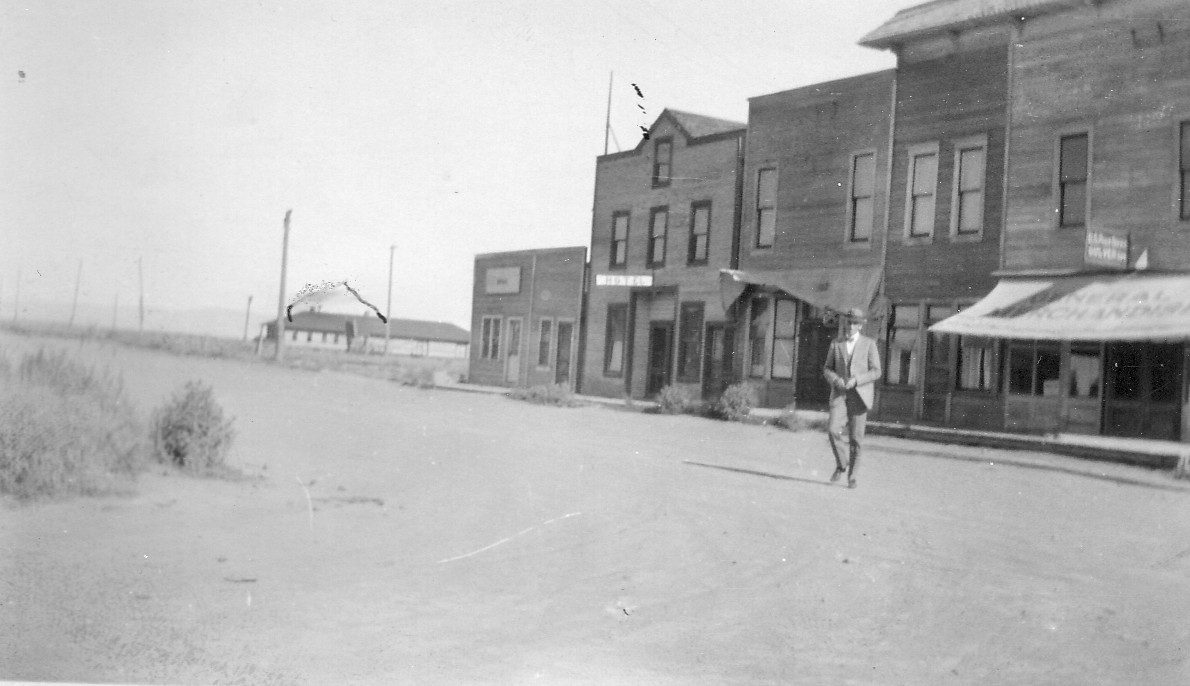
Culver in 1925.
Following victory in WWII in 1945, Jefferson County celebrated the arrival of irrigation water in1946. Water’s arrival sparked a population boom. The federal irrigation project limited how many acres each farmer could own, so lands were parceled and sold, creating a land rush of sorts. Many young farm families, several from Idaho with irrigation experience, moved to the county. Madras enjoyed unprecedented growth in the 1940s, going from a population of just 412 in 1940 to topping 1,000 by 1947.

CCC crews rest at the Rimrock Springs camp. The men tore down homesteads over land that became the Crooked River National Grassland.
It didn’t take long for the promise of irrigation to bear fruit. The first signature crop was ladino clover, but during the 1960s, a new crop became the local rage: mint. By the 1970s, Jefferson County was the “mint capital of the world,” with more than half of the district’s 56,000 acres dedicated to the crop, which had unsurpassed quality. Two mid-century hydroelectric projects transformed the county. Portland General Electric erected Pelton Dam in 1957, downriver from the confluence of the Deschutes, Crooked and Metolius rivers. In 1964, PGE built an even larger dam, Round Butte, closer to the confluence of the three rivers. The projects made lakes Simtustus (behind Pelton) and Billy Chinook (behind Round Butte), created Pelton Park and the Cove Palisades State Park, and helped turn the county into a water-sports haven. At one point, PGE made up nearly 20 percent of the county’s tax base.
The dams were transformative for the Warm Springs Nation as well, since the west sides of the dams were built on reservation property. The tribes used revenue received from PGE to purchase Kah-Nee-Ta Hot Springs in 1961, and then built Kah-Nee-Ta Resort, featuring the Village project constructed in 1964. In 1974, they built the Kah-Nee-Ta Lodge, which featured tennis courts and a golf course. The Kah-Nee-Ta complex become one of the state’s most unique and popular resorts. The tribes, in 1964, also built a modern community center with a large gymnasium and other facilities, and in 1967, established Warm Springs Forest Products Industries. During that progressive era, Warm Springs earned a reputation as one of the economically strongest Native American reservations in the country.
In the early 1970s, “Crooked River Bob” started advertising a new recreational subdivision in southern Jefferson County, offering high desert home sites targeted at recreation buffs and retirees. The project included a swimming pool and eventually a golf course. Today, Crooked River Ranch is the largest subdivision in the state, sprawling along the Crooked and Deschutes rivers, with more than 5,000 residents. While more socially and economically tied to Redmond and Deschutes County, the Ranch has helped make Jefferson one of the fastest-growing counties in the state — and it is the largest voting precinct in the county and a force in local politics.

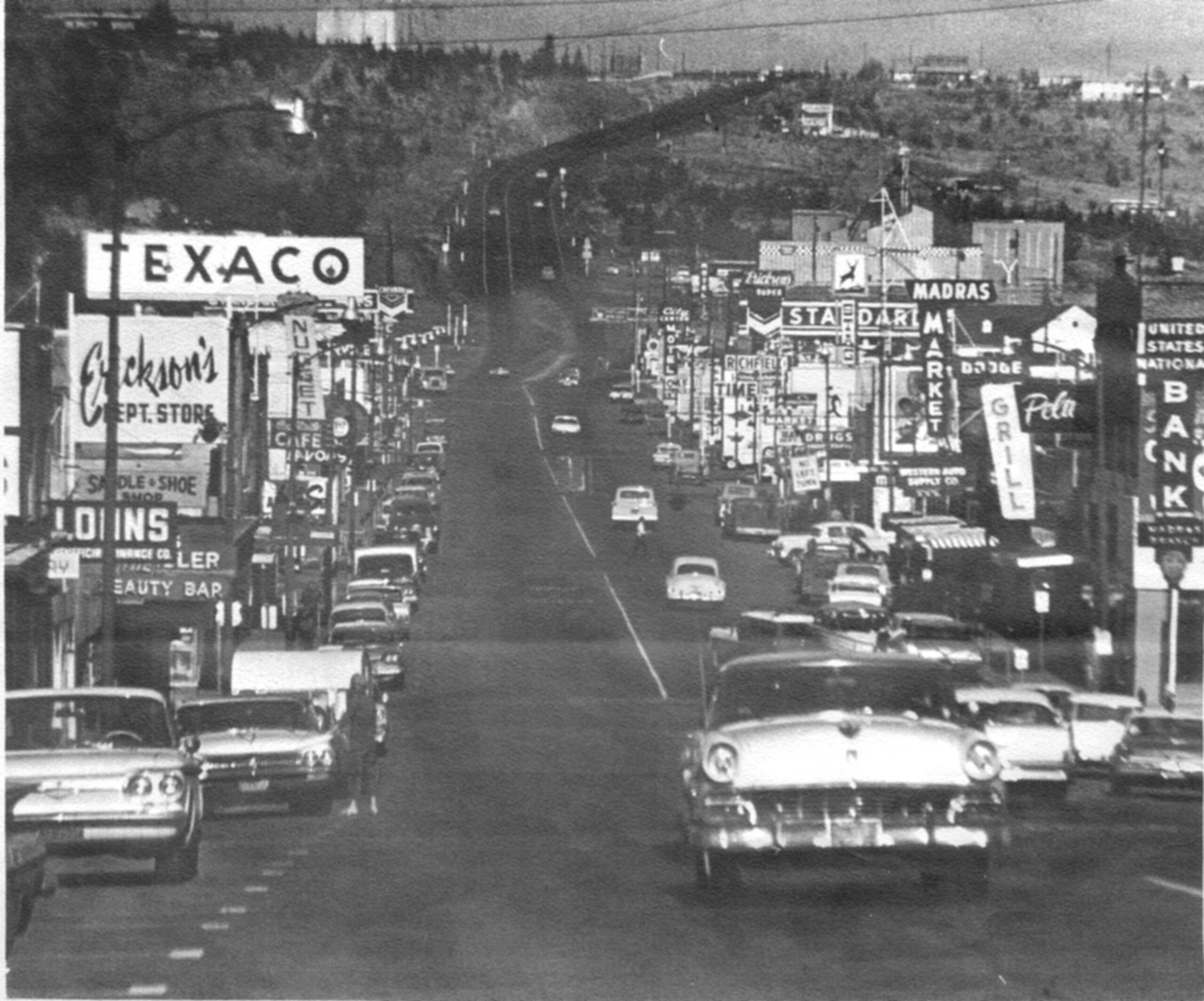
Madras in the late 1930s.
Another county area with a lifeblood of recreation is the beautiful southwest section, featuring Camp Sherman and Suttle Lake, located on the edge of the Cascades’ timberland. Camp Sherman was “discovered” by farmers from Sherman County in the early 1900s, when families began vacationing in the cool timber country by the Metolius River after harvest. The Camp Sherman area has a rich history, including CCC crews headquartering there during the Depression. It is also home to the beautiful and mysterious headwaters of the Metolius and the Wizard Falls Fish Hatchery. The quaint Camp Sherman Store has been in business since 1915.

Parade at the airport for the irrigation water arrival, in 1946.
A “colorful” era of Jefferson County history began in 1981, when Indian guru Bhagwan Shree Rajneesh and his commune purchased the Muddy Ranch and set up a commune, Rajneeshpuram, in northeast Jefferson County. Red-clad commune members immediately started showing up in Madras to buy groceries and supplies and even served the local community as medical professionals. But soon, problems arose.
The commune took over the Antelope City Council and renamed the town Rajneesh, inspiring local anger and protests. Meanwhile, the Bhagwan made near daily drives in his Rolls-Royces from the commune to Madras, followed by an entourage and at times met by local protesters, then he’d turn around and head back to the commune.
In 1985, the commune unraveled after being connected to poisoning efforts, including salmonella poisonings in 10 restaurants, as well as an effort to poison the water system of The Dalles. In September, Ma Anand Sheela, the personal secretary to the Bhagwan and president of the international organization, fled the country amid charges of corruption from the Bhagwan himself, who in November pleaded guilty to sham marriages and lying to immigration officials.
He left the country before the year ended. The commune dispersed as quickly as it was erected. What was once Rajneeshpuram is now owned by the Washington Family, a Christian organization that remodeled the facility into a successful youth camp organization.
As the 20 the century closed, Jefferson County and its communities joined all of Central Oregon in a growth boom of the 1990s that continued into the 21st century. In Jefferson County, the population grew nearly 40 percent between 1990 to 2000, from 13,676 to 19,009, and is approaching 26,000 in 2026. The spike was substantially spurred by the growth in Hispanic population in the last two decades of the 1900s.
By the 1990s, Hispanic culture had forged strong roots in the county, made evident in many ways, including the growth of Hispanic-owned businesses. The influence of the Hispanic culture continues to grow in Jefferson County, and the county continues to evolve and modernize.
Yet Jefferson County is still a place where history remains a part of the culture, still very much a part of our lives. As it was at the dawn of the 1900s, we remain committed to agriculture, are fueled by the wide-open views of our bold landscapes, and cherish and respect the value of our rivers and waterways.
We remain a collection of unique small communities, all diverse and independent, but united all the same.
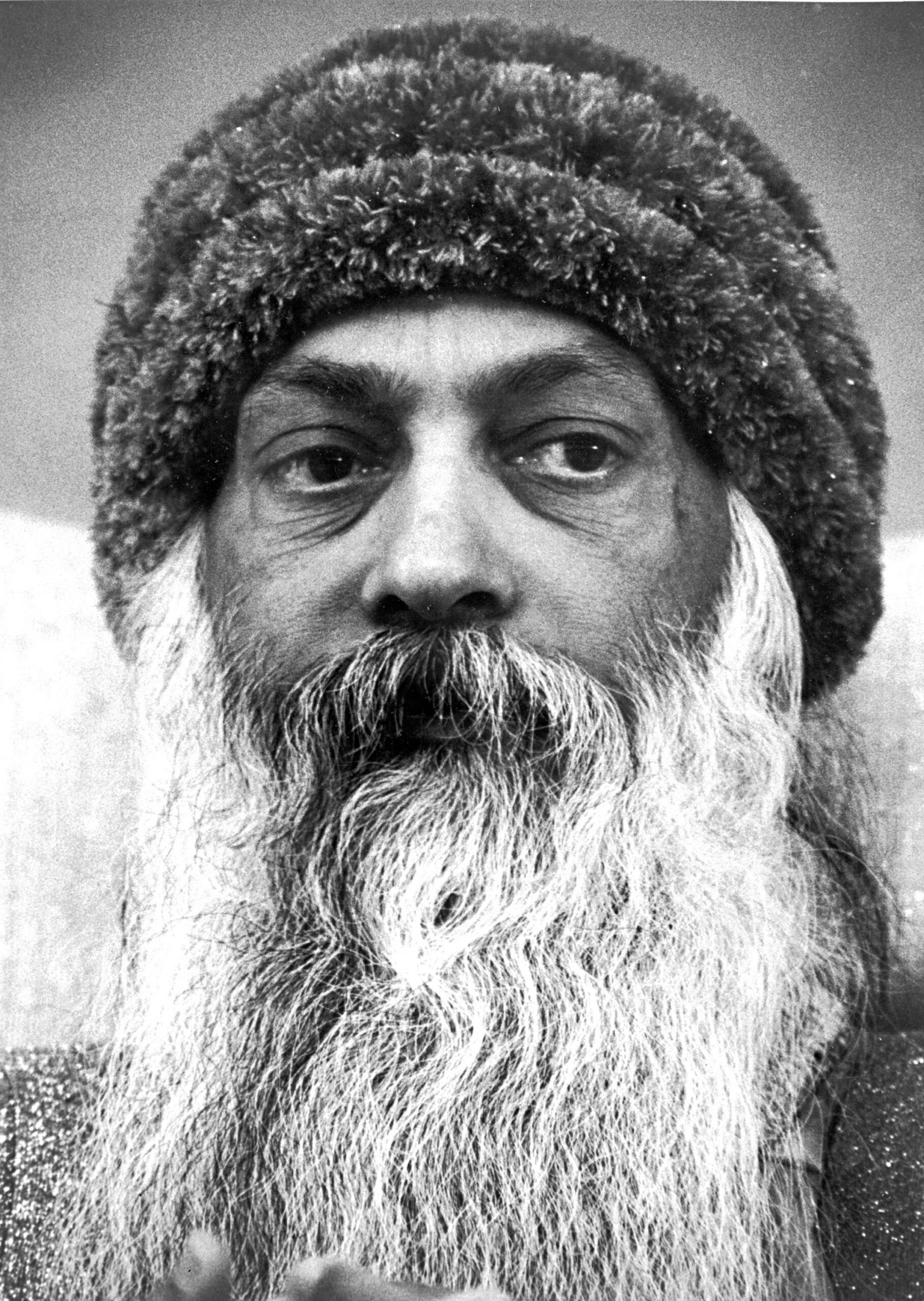
Bhagwan Shree Rajneesh